Specialized Care to Help You Keep Your Natural Tooth
What Is Endodontic Resorption?
Resorption is a process in which the body’s own cells begin to break down tooth structure. It can affect the internal surface of the tooth, the external surface of the root, or both. While resorption is a normal part of how primary (baby) teeth are shed, it is not a normal process for permanent teeth, and when it occurs in adult dentition it typically requires evaluation and intervention to prevent further loss of tooth structure.
We diagnose and treat resorption for patients referred from Escondido, San Marcos, Vista, Poway, and throughout North County San Diego.
Resorption does not always cause noticeable symptoms in its early stages. It is frequently identified on routine radiographs taken by a general dentist, or discovered during evaluation for another concern. Early detection gives the treating clinician the most options for preserving the tooth.
HOW IS RESORPTION DIAGNOSED AND TREATED?
Evaluation and 3D Imaging
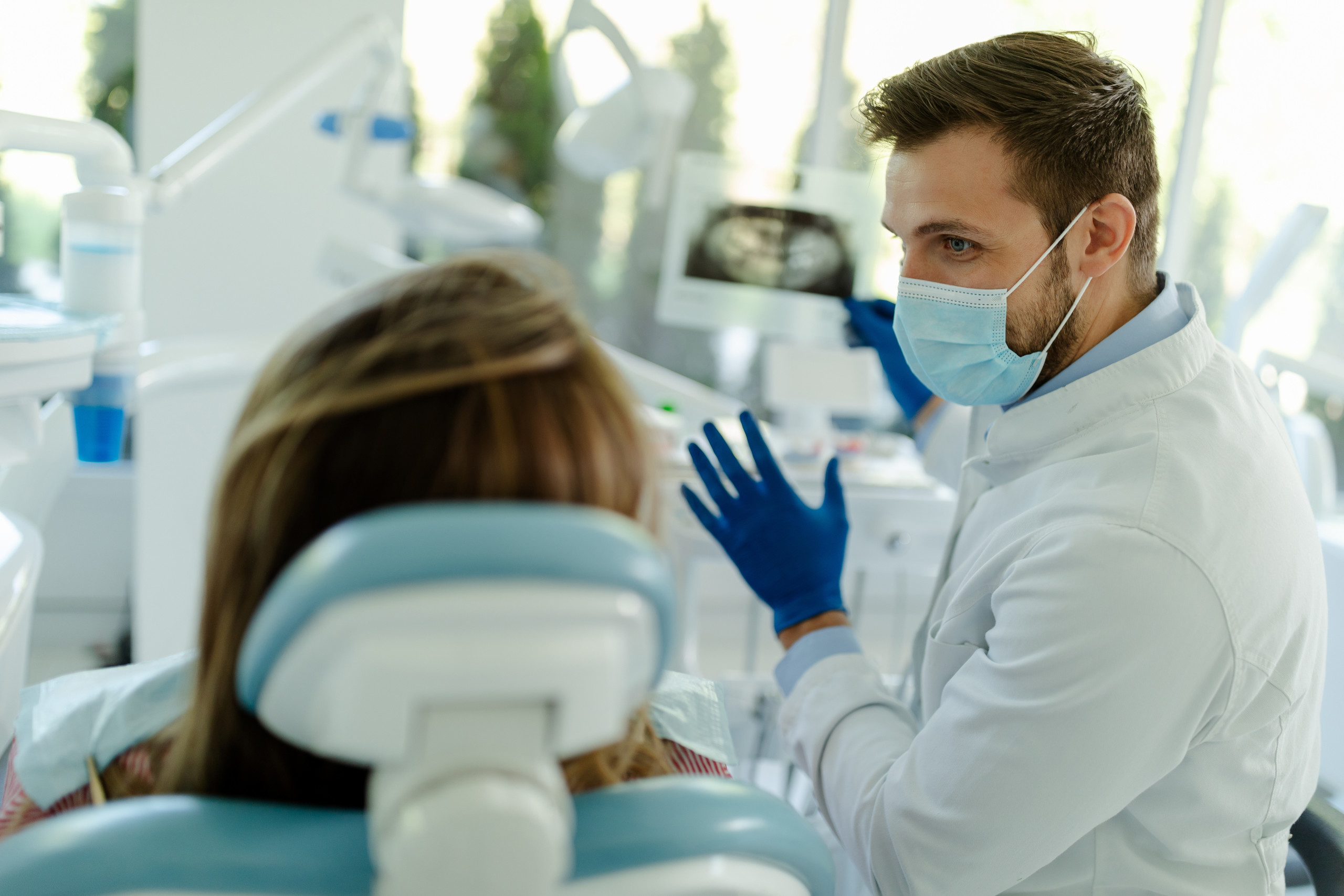
Accurate diagnosis of resorption requires a thorough clinical exam and, in most cases, CBCT imaging. A conventional flat X-ray can suggest the presence of resorption but cannot reliably show its three-dimensional extent, depth, or relationship to surrounding structures. CBCT allows the treating clinician to view the lesion from multiple planes and assess how much tooth structure remains, which directly informs the treatment plan.
Treatment Planning
Treatment options depend on the type of resorption, its location, how far it has progressed, and whether the pulp has been affected. In some cases, non-surgical endodontic treatment is appropriate. In others, a surgical approach is needed to access and repair the resorptive defect directly. There are also situations where the extent of involvement is too advanced for predictable repair, and the tooth cannot be preserved. An honest assessment of the situation before beginning treatment is an essential part of the process.
Non-Surgical Treatment
For internal resorption confined within the canal system, root canal treatment removes the affected tissue, cleans and shapes the canal, and seals it to prevent further progression. The goal is to eliminate the biological stimulus driving the resorptive process.
Surgical Treatment
For external or cervical resorption that cannot be adequately managed non-surgically, a surgical approach may be indicated. This involves accessing the resorptive defect through a small incision, removing the resorptive tissue, and repairing the affected root surface with a biocompatible material. Endodontic microsurgery is performed under surgical microscope magnification, which allows the level of precision this type of repair requires.
AFTER RESORPTION TREATMENT
Recovery following resorption treatment varies depending on whether a surgical or non-surgical approach was used. For non-surgical cases, recovery is similar to that following root canal treatment, with mild tenderness in the area for a few days. Surgical cases typically involve some swelling and discomfort for two to three days, manageable with over-the-counter pain relief and cold application.
Follow-up imaging is an important part of monitoring the treated tooth over time. We will provide specific instructions and coordinate with your general dentist on the timing of any final restoration.